CHAI SEAS TRAVEL
exploring Jewish routes to your roots
"All journeys have secret destinations of which the traveler is unaware"___ Martin Buber


CANARY ISLANDS
The Spanish Inquisition and Judaism in the Canaries and Jewish Life today
The Spanish Inquisition and Judaism in the Canaries
Posted: August 19, 2013 by Tenerife News
In 1492, a Royal edict was issued in Spain by the “Reyes Catolicos” (Catholic Monarchs), Fernando and Isabella, expelling from Spain all Jews who failed to convert to Catholicism.
Many Jews embraced their new faith (or at least made the appearance of so doing) whilst others fled Spain leaving property and possessions behind them.
The “Conversos” or New Christians as they were known openly practiced their new faith in public while at the same time continued their Jewish practices in private.
Many of these Conversos found their way to the Canary Islands, then only just coming under the sphere of Spanish influence, and as a result of this, an Episcopal Inquisition was set up in 1499.
This investigation disclos-ed the existence of a secret synagogue and that a large number of secret Jews were practicing their old faith and in consequence a branch of the Inquisition of Andalusia was set up in Las Palmas in 1504. As a result of numerous “denuncias” (reports), there followed a series of “Autos-de-Fe”. These were trials at which individuals were penanced or reconciled, with one in 1507 and another three years later. Those who were sentenced to death were customarily burned at the stake (this was euphemistically known as being “relaxed” or relajado). This continued and in 1526, eight individuals were “relaxed” with two being penanced and two being reconciled. Two further “Autos” were held in 1530 and 1534 but it was not felt necessary to relax anyone on these occasions.
This period of persecution seems to have eradicated crypto-Judiasm in the islands for a while. However, there was a fresh wave of Conversos who arrived from the peninsular at the beginning of the 17th century. This coincided with the Anglo-Spanish peace achieved in 1604 and sparked a considerable increase in the wine and sugar trade in the islands, businesses which were of great interest to the “New Christians” of Lisbon, Bordeaux and Bayonne, as well as the Jews of Amster-dam. These second waves of Jewish immigrants were for the most part wealthy merchants of a higher social class, compared with the earlier settlers who had been from more humble roots. The numbers were bolstered even further by a new wave of anti-Semitism which hit Portugal around this period (between 1612 and 1630 the Portuguese Inquisition held no less than 47 large “Autos de Fe”).
This new wave however was more astute in disguising their true religious beliefs as they had integrated with the native community, being baptised and taking Portu-guese and Spanish husbands and wives; apart from these marriages there were many “Old Christians” and free thinkers who sought new and more open horizons who converted to Judaism.
This increase in numbers prompted fresh activity from the Holy Inquisition and it was in 1625 that a fresh attack was launched against these new immigrants with the publication of a new edict of faith against Judaism. The following year, the then capital city of La Laguna was described as being “full of Jews and heretics” (the heretics being British and Dutch Protestants).
The families of Fernan Pinto and Antonio Fonseca were made examples of to varying degrees ranging from being “Relaxed” to being condemned to wear the “Sabineto”.
The Inquisition relied heavily on denunciations from the general public in order to start investigations of alleged heresy and, with the passing of time, this practice had lost its momentum. The islands’ populations greatly appreciated the rolls played by the Jews in re-establishing a very profitable commerce with England and Holland and were not about to support too much heavy-handedness against them from the church.
Shortly after the peace treaty of 1604, a second accord was reached with Holland in 1609 and this had the effect of greatly reducing the coffers of the Inquisition as it was no longer able to rely on income from goods and ships confiscated from those heretical nations.
The inquisitors were no longer able to bring pro-secutions with the same frequency as before and although they still relied on “informants”, the heretics they were attempting to persecute were not just Spanish Jews, but by this time, included mem-bers of the Crypto-Jewish communities of France and England as well as members of the open Jewish community of Holland, originally established by New Christians from the Iberian Peninsular.
As a consequence, the number who could be tried and condemned by the tribunals of the Inquisition had greatly reduced. The last of these proceedings was held against Gaspar de Perera, in the second half of the 17th century. By this time it was proving more and more difficult for the Inquisition to find any Jews left to prosecute and with increasing liberality in northern Europe the number of Jews in Spain and the islands greatly decreased. The local inquisition had to content itself with cases against witchcraft, religious morality and attempting to stop the flow of books onto the islands.
As time passed it became the subject of public ridicule but it was not until 1813 that it was abolished. This news was greeted with great joy by all but a few short months later (in true Spanish style) it was reinstated, when Fernando VII assumed the throne.
Spain had to wait a further seven years before the final abolition of the Inquisition which was finally relieved of its duties in 1820.
The Gran Canaria Jewish Community: What now and Where?
DECEMBER 17, 2013
Times of Israel
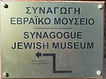
Their tiny house of worship, situated on one of the main roads in Las Palmas, Gran Canaria, bears not identifying mark. It is part of a plain building, just like any other on that same block
Their handfuls of members quietly and cautiously gather in it on Shabbat and other special occasions to observe their tradition and celebrate their holidays. Though not physically threatened, these people live under a shadow of uncertainty, a nagging reminder of the long and mostly painful history of their people
This is the reality currently facing the Jews of Las Palmas, the largest and most organized Jewish community in Gran Canaria, in the Canary Islands located in the Atlantic Ocean west of North Africa. I met with some of them a couple of weeks ago and the story they unfolded left me distraught and concerned. Most of present day Jews of the Canary Islands are newcomers; primarily from Morocco and other North African countries. They moved there for commercial reasons during the early sixties of the last century, at the end of the French and Italian colonial period
Jews, however, are not new to the Canary Islands. The first wave of Jewish immigration to these islands dates back to the end of the fifteenth century. Those were mostly “New Christians” also known as “Crypto Jews” * who were forced to abandon their faith and adopt Catholicism while remaining firm and devoted to Judaism during the Spanish and Portuguese Inquisitions. They came to these remote islands in search of new havens after their expulsion in 1492
The second wave of Jewish immigration to these Islands was mostly of rich Portuguese Jews of higher social class. It dates from the first part of the seventeenth century. The peace treaty between Spain and England, signed in 1604, gave rise to the trade of wine and sugar from the islands and drew many Crypto-Jews from Lisbon, Bordeaux and Amsterdam. This second group of Jewish immigrants was able to defy the Spanish and Portuguese not only by continuing to preserve their Judaism in secret but by marrying “Old Christians” who ended up converting to Judaism. Moreover, many individuals, who were part of the “Old Christians,” sought to disengage and liberate themselves from the grip of the Catholic Church, joined these communities and converted to Judaism
Unfortunately for these Jews, the Inquisition soon caught up with Canarian Islands and lasted three centuries. That brought a bitter end to Jewish life in the archipelago for the next one hundred years until the influx of Jews from North Africa in the middle of the twentieth century
The few members of the Jewish community that we met in Las Palmas are not aware of any remaining descendants of Crypto-Jews on the Islands. One of them, though, did share with us that his late wife who was a physician used to visit communities in the remote area of San Mateo and learned that some of its inhabitants light two candles every Friday night. No one could tell her why
The modern Jewish community of Las Palmas and other smaller, less organized such communities of the Canarian archipelago, are not suffering or being persecuted as their predecessors were. However, they undoubtedly face new and difficult challenges
One of these hardships is the growing anti-semitism. The old traditional religious one is still occurring and practiced by some members of the Catholic Church. Unfortunately, in recent years, members of the Jewish community have also as in many other places around the globe, been subject to and harassed by political anti-semitism, a by-product of the Israeli – Arab/Muslim conflict and the brainwashing efforts of their well oiled propaganda machine. It is not uncommon to meet residents of the Islands who, when asked what a Jew is, respond by saying: “It is one who murders Palestinian children….” It is not surprising, therefore, that many Jews here live in mistrust and uncertainty
Lastly, like many other communities in the Jewish world, the numbers of this one are also dwindling due to immigration and assimilation. Their inspiring and brilliant rabbi is ninety four years old and there is no one who could take his place and ensure the continued cohesive fiber of the community
Will Gran Canaria be one day added to the growing list of places where there once was a Jewish community? Only time will tell!